

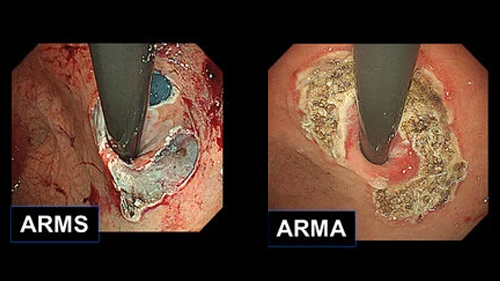
ARMS & ARMA
ARMS (Anti-Reflux Mucosectomy) and ARMA (Anti-Reflux Mucosal Ablation) are advanced endoscopic procedures designed to treat selected patients with troublesome gastroesophageal reflux by modifying the mucosa at the gastroesophageal junction.
These minimally invasive endoscopic techniques aim to improve the barrier function at the gastroesophageal junction and may be considered in carefully selected patients with persistent reflux symptoms, particularly when conventional treatment has not provided adequate relief.
The choice between ARMS, ARMA and other reflux therapies depends on the patient's symptoms, endoscopic findings, response to medical treatment and overall clinical assessment.
Conditions
ARMS and ARMA may be considered for selected patients with:
- Persistent gastroesophageal reflux disease (GERD)
- Troublesome reflux symptoms despite appropriate medical treatment
- Regurgitation or heartburn affecting daily activities
- Selected patients seeking an endoscopic treatment option for reflux
- Reflux disease confirmed through appropriate clinical and endoscopic evaluation
Symptoms
Common symptoms associated with gastroesophageal reflux may include:
- Frequent heartburn or burning sensation behind the chest bone
- Acid or food regurgitation
- Reflux symptoms after meals or while lying down
- Persistent sour or bitter taste in the mouth
- Chronic cough or throat irritation associated with reflux
- Sleep disturbance related to nighttime reflux
- Chest or upper abdominal discomfort related to reflux
Causes
Gastroesophageal reflux occurs when stomach contents repeatedly move back into the esophagus. A weakened or dysfunctional gastroesophageal junction can contribute to reflux symptoms.
- Impaired function of the lower esophageal sphincter
- Transient relaxation of the lower esophageal sphincter
- Hiatal hernia in some patients
- Increased pressure within the abdomen
- Dietary and lifestyle factors that aggravate reflux
- Other factors affecting the gastroesophageal junction
Treatment
ARMS and ARMA are performed through an endoscope without external surgical incisions. The treatment focuses on carefully modifying the mucosa around the gastroesophageal junction to promote formation of a tighter anti-reflux barrier during healing.
Depending on the selected technique, treatment may include:
- Endoscopic assessment of the gastroesophageal junction
- ARMS using controlled endoscopic mucosal resection
- ARMA using controlled endoscopic mucosal ablation
- Targeted treatment around the gastroesophageal junction
- Post-procedure dietary and medication guidance
- Follow-up assessment of reflux symptoms and treatment response
The most appropriate approach is selected after evaluating the patient's reflux pattern, anatomy, previous treatment and suitability for endoscopic therapy.
Prevention & Follow-Up
Lifestyle measures and appropriate follow-up remain important after ARMS or ARMA to support symptom control and assess the response to treatment.
Helpful measures include:
- Follow the post-procedure diet and medication plan provided by your doctor.
- Avoid meals close to bedtime when advised.
- Identify and limit foods or drinks that consistently trigger reflux symptoms.
- Maintain a healthy weight where appropriate.
- Elevate the head of the bed if nighttime reflux is a persistent concern and your doctor recommends it.
- Attend scheduled follow-up to assess symptom improvement.
- Report persistent chest pain, difficulty swallowing, vomiting, bleeding or worsening reflux symptoms.
Recovery and symptom improvement vary between patients. Follow-up is individualized according to the treatment performed and the underlying reflux condition.