

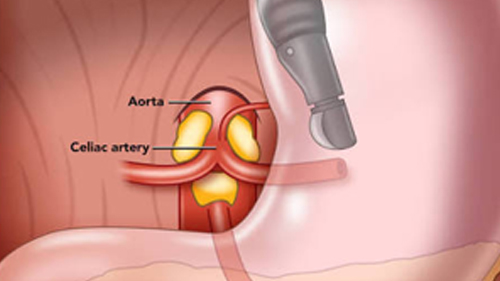
Celiac Block / Neurolysis
Celiac Block / Neurolysis is an advanced procedure used to reduce pain arising from the upper abdominal organs by targeting the celiac plexus, a network of nerves that carries pain signals from the abdomen. Endoscopic ultrasound (EUS) can be used to guide the injection accurately in selected patients.
The celiac plexus lies near the major blood vessels and structures around the upper abdomen. Using EUS guidance, the doctor can identify the relevant anatomy and deliver medication around the celiac plexus. A celiac block may use a local anesthetic with or without a steroid, while neurolysis uses an agent intended to provide longer-lasting interruption of pain transmission.
Dr. Suresh H. Pasiddhi has documented expertise in EUS-guided celiac block and neurolysis as part of advanced therapeutic EUS procedures.
Conditions
Celiac block or neurolysis may be considered in selected patients with significant upper abdominal pain associated with conditions such as:
- Pancreatic cancer-related abdominal pain
- Chronic pancreatitis with persistent pain
- Other selected upper abdominal malignancy-related pain
- Severe chronic upper abdominal pain requiring targeted pain management
Symptoms
Patients being considered for celiac block or neurolysis may experience persistent upper abdominal pain related to an underlying pancreatic or other upper abdominal condition, such as:
- Persistent or severe upper abdominal pain
- Pain radiating to the back
- Pain that interferes with sleep or daily activities
- Recurrent pain associated with chronic pancreatitis
- Cancer-related abdominal pain
- Reduced appetite or difficulty maintaining normal activities because of pain
Causes
Upper abdominal pain treated with celiac block or neurolysis can arise from several underlying conditions, including:
- Chronic inflammation and nerve sensitization associated with chronic pancreatitis
- Pancreatic or other upper abdominal cancers involving pain pathways
- Persistent visceral pain from upper abdominal disease
- Complex chronic pain that remains significant despite appropriate treatment of the underlying condition
The suitability of celiac block or neurolysis depends on the cause, severity and pattern of pain, previous treatments and the patient's overall clinical condition.
Treatment
EUS-guided celiac block or neurolysis is performed using a specialized endoscope with an ultrasound probe. The celiac plexus and surrounding anatomy are identified under EUS guidance before the selected medication or neurolytic agent is delivered.
Depending on the patient's condition, treatment may include:
- EUS-guided identification of the celiac plexus and surrounding structures
- Targeted celiac plexus block using appropriate medication
- Celiac plexus neurolysis in selected patients requiring longer-lasting pain relief
- Use of ultrasound guidance to improve precision of the injection
- Integration with the patient's broader pain-management and disease-specific treatment plan
The choice between a temporary nerve block and neurolysis depends on the underlying disease, expected duration of pain, treatment goals and individual patient factors. The procedure is intended to complement, not replace, treatment of the underlying condition.
Prevention & Follow-Up
Follow-up after celiac block or neurolysis focuses on pain response, ongoing treatment needs and management of the underlying condition.
Helpful measures include:
- Follow the pain-management plan provided by your treating team.
- Continue appropriate treatment for the underlying pancreatic or abdominal condition.
- Keep scheduled follow-up appointments to assess pain relief and functional improvement.
- Take prescribed medicines as directed and discuss any changes in pain or medication requirements with your doctor.
- Follow post-procedure dietary and activity instructions provided by the treating team.
- Seek prompt medical attention for severe abdominal pain, fever, persistent vomiting, bleeding, dizziness or other concerning symptoms after the procedure.
Pain relief can vary between patients and may not be complete or permanent. Further pain-management strategies or repeat evaluation may be considered according to the underlying condition and response to treatment.