

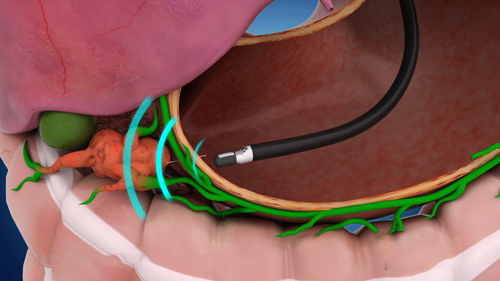
Diagnostic & Therapeutic EUS with FNAC
Diagnostic & Therapeutic Endoscopic Ultrasound (EUS) with Fine-Needle Aspiration Cytology (FNAC) is an advanced minimally invasive procedure used to examine the digestive tract and nearby organs in detail. EUS combines endoscopy with high-resolution ultrasound, while FNAC allows selected lesions to be sampled for further evaluation.
EUS can provide detailed images of the pancreas, bile ducts, gallbladder, gastrointestinal wall, lymph nodes and other structures located close to the digestive tract. When required, a fine needle can be guided under EUS imaging to obtain cells or tissue from selected masses, lymph nodes or cystic lesions.
Dr. Suresh H. Pasiddhi has expertise in diagnostic and therapeutic EUS, including EUS-guided FNAC and advanced EUS-based interventions.
Conditions
EUS with FNAC may help evaluate and diagnose a range of gastrointestinal, pancreatic and biliary conditions, including:
- Pancreatic masses and lesions
- Pancreatic cystic lesions requiring further evaluation
- Submucosal or gastrointestinal wall lesions
- Enlarged or suspicious lymph nodes
- Bile duct and gallbladder abnormalities
- Lesions located close to the upper gastrointestinal tract
- Unexplained abnormalities identified on CT, MRI or other imaging
- Selected conditions requiring therapeutic EUS intervention
Symptoms
Your doctor may recommend EUS with or without FNAC when you have persistent, unexplained or concerning symptoms or when previous investigations show an abnormality, such as:
Common Symptoms
- Persistent or recurrent upper abdominal pain
- Unexplained weight loss
- Loss of appetite
- Jaundice or yellowing of the eyes and skin
- Persistent nausea or vomiting
- Recurrent pancreatitis or pancreatic-type abdominal pain
- Abnormal findings on ultrasound, CT or MRI
Causes
The findings that lead to EUS and FNAC can have many different causes. Depending on the individual patient, these may include:
- Pancreatic or biliary abnormalities seen on imaging
- Suspected tumors or abnormal tissue growths
- Pancreatic cysts or fluid collections
- Gastrointestinal wall thickening or submucosal lesions
- Enlarged or suspicious lymph nodes
- Indeterminate findings requiring further characterization
- Conditions requiring tissue or cytological confirmation before treatment planning
Treatment
EUS is performed using a specialized endoscope with an ultrasound probe at its tip. The procedure allows detailed imaging of the digestive tract and surrounding structures and, when clinically appropriate, enables targeted sampling or selected therapeutic procedures.
Depending on the findings, EUS-based treatment and diagnostic procedures may include:
- Detailed EUS examination of the pancreas and biliary system
- EUS-guided fine-needle aspiration (FNAC) of selected lesions
- Sampling of selected lymph nodes or masses for cytological evaluation
- Assessment and aspiration of selected cystic lesions
- Detailed evaluation of gastrointestinal wall and submucosal lesions
- Selected therapeutic EUS procedures based on the underlying condition
The appropriate EUS technique depends on the location and nature of the abnormality, the suspected diagnosis and the information required for treatment planning. Not every lesion requires FNAC, and the decision is individualized for each patient.
Prevention & Follow-Up
Good preparation and appropriate follow-up help ensure that EUS and FNAC findings can be interpreted accurately and used effectively for further management.
Helpful measures include:
- Follow the fasting and preparation instructions provided before the procedure.
- Inform your doctor about all medicines, particularly blood-thinning medicines, before a needle-based procedure.
- Attend follow-up appointments to review FNAC or other laboratory results.
- Complete recommended blood tests or imaging when advised.
- Follow post-procedure dietary and medication instructions.
- Seek prompt medical attention for severe abdominal pain, fever, persistent vomiting, bleeding or other concerning symptoms after the procedure.
Further treatment or surveillance depends on the EUS findings and the results of FNAC or other sample analysis. Your gastroenterologist will recommend the appropriate next steps based on the final diagnosis.