

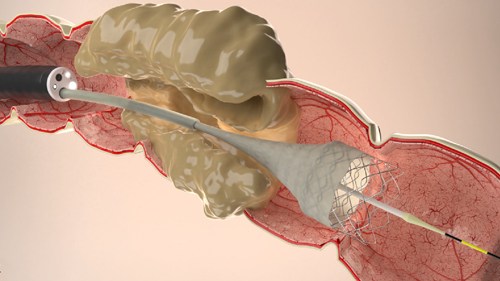
Esophageal & Colonic Stenting
Esophageal and colonic stenting are endoscopic procedures used to place a flexible stent within a narrowed or obstructed section of the gastrointestinal tract to help restore or maintain the passage of food, fluids or intestinal contents.
An esophageal stent may be used for selected esophageal obstructions or strictures, while colonic stenting can be considered for suitable large-bowel obstructions. The procedure is performed under endoscopic guidance, with the choice of stent and technique determined by the underlying condition and location of the obstruction.
Dr. Suresh H. Pasiddhi has documented expertise in esophageal and colonic stenting as part of his therapeutic endoscopic practice.
Conditions
Stenting may be considered for selected gastrointestinal narrowing or obstruction, including:
- Esophageal strictures and narrowing
- Malignant esophageal obstruction
- Selected benign esophageal obstruction
- Malignant colonic obstruction
- Selected large-bowel strictures or obstruction
- Selected cases requiring restoration of gastrointestinal passage
Symptoms
Symptoms vary according to the location and cause of the obstruction. Possible symptoms may include:
Esophageal Symptoms
- Difficulty swallowing (dysphagia)
- Pain or discomfort while swallowing
- Regurgitation of food or liquids
- Difficulty eating or drinking
- Unexplained weight loss
Colonic Symptoms
- Abdominal pain or cramping
- Abdominal bloating or distension
- Persistent constipation or inability to pass stool
- Difficulty passing gas
- Nausea or vomiting
Causes
Gastrointestinal narrowing or obstruction can develop from different conditions. The underlying cause is evaluated before deciding whether stenting is appropriate.
- Gastrointestinal cancers causing obstruction
- Benign esophageal strictures
- Scarring or narrowing following inflammation or previous treatment
- Selected recurrent gastrointestinal strictures
- Other structural causes of suitable gastrointestinal obstruction
Treatment
During stenting, the narrowed or obstructed segment is assessed using endoscopic guidance and an appropriately selected stent is positioned across the affected area to help maintain an open passage.
Depending on the patient's condition, treatment may include:
- Endoscopic placement of an esophageal stent
- Endoscopic placement of a colonic stent
- Stent positioning across the narrowed or obstructed segment
- Endoscopic assessment and management of the underlying lesion
- Additional dilatation or other endoscopic treatment when clinically appropriate
- Further surgical or specialist treatment when required
The choice of stent and treatment approach depends on the location, severity and cause of the narrowing or obstruction and the patient's overall clinical condition.
Prevention & Follow-Up
Not all gastrointestinal strictures or obstructions can be prevented. Appropriate management of the underlying condition and regular follow-up can help identify recurrent symptoms or stent-related concerns early.
Helpful measures include:
- Follow your gastroenterologist's recommended follow-up schedule.
- Take prescribed medicines as directed.
- Follow dietary instructions provided after esophageal stent placement.
- Report recurrent difficulty swallowing, vomiting, abdominal pain or increasing abdominal distension.
- Seek prompt medical attention if you are unable to pass stool or gas or develop severe abdominal symptoms.
- Attend recommended endoscopic or imaging follow-up when advised.
Follow-up depends on the underlying condition, type and location of the stent, treatment goals and the patient's response.