

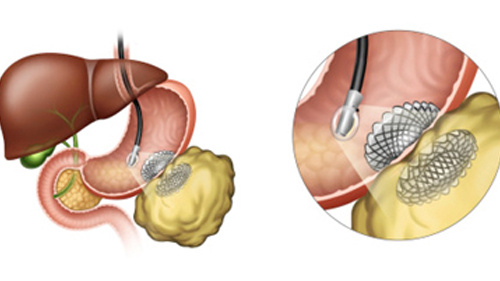
Cystogastrostomy
Cystogastrostomy is an advanced endoscopic procedure used to drain selected pancreatic fluid collections, such as symptomatic or persistent pancreatic pseudocysts and walled-off collections, into the stomach. Endoscopic ultrasound (EUS) guidance helps identify a safe drainage route and allows the collection to be accessed using specialized techniques.
Pancreatic fluid collections can develop after acute pancreatitis or other pancreatic conditions. When a collection becomes mature, symptomatic, infected or persists despite conservative management, drainage may be considered. In suitable cases, EUS-guided cystogastrostomy provides internal drainage without the need for an external drain or open surgical procedure.
Dr. Suresh H. Pasiddhi has documented expertise in therapeutic EUS, including cystogastrostomy for selected pancreatic fluid collections.
Conditions
Cystogastrostomy may be considered for selected pancreatic fluid collections, including:
- Symptomatic pancreatic pseudocysts
- Persistent pancreatic fluid collections
- Walled-off pancreatic necrosis in appropriately selected cases
- Pancreatic collections causing gastric or duodenal compression
- Pancreatic fluid collections associated with pain, vomiting or early satiety
- Selected infected or complicated pancreatic fluid collections requiring drainage
Symptoms
Pancreatic fluid collections may cause symptoms such as:
Common Symptoms
- Persistent or recurrent upper abdominal pain
- Pain that may radiate to the back
- Persistent nausea or vomiting
- Early fullness or difficulty eating
- Abdominal bloating or discomfort
- Fever or chills when infection is present
- Unexplained weight loss or reduced appetite
Causes
Pancreatic fluid collections can develop due to several pancreatic conditions, including:
- Acute pancreatitis
- Severe or necrotizing pancreatitis
- Chronic pancreatitis
- Pancreatic duct disruption or leakage
- Pancreatic trauma or other pancreatic injury
- Complications following pancreatic procedures or surgery
Treatment
EUS-guided cystogastrostomy is performed using an endoscope with an ultrasound probe at its tip. The pancreatic fluid collection is identified from within the stomach or nearby digestive tract, and a carefully selected access route is created to allow internal drainage.
Depending on the collection and individual patient, treatment may include:
- EUS-guided puncture of a suitable pancreatic fluid collection
- Creation of a controlled drainage pathway between the collection and stomach
- Placement of appropriate drainage stents
- Drainage of infected or symptomatic pancreatic fluid collections in selected cases
- Endoscopic necrosectomy or additional intervention when clinically appropriate for selected walled-off necrosis
- Follow-up endoscopy or imaging to assess resolution and stent management
The timing and method of drainage depend on the maturity, size, location and contents of the collection, its relationship to surrounding structures and the patient's clinical condition. Not every pancreatic fluid collection requires drainage.
Prevention & Follow-Up
Follow-up after cystogastrostomy is important to monitor the pancreatic collection, confirm adequate drainage and determine whether further intervention or stent management is required.
Helpful measures include:
- Attend scheduled follow-up visits and imaging as advised.
- Follow dietary and medication recommendations after the procedure.
- Monitor for recurrence of abdominal pain, vomiting or other symptoms.
- Complete recommended blood tests or imaging to assess the response to drainage.
- Keep scheduled appointments for stent assessment, removal or exchange when required.
- Seek prompt medical attention for severe abdominal pain, fever, vomiting, gastrointestinal bleeding or other concerning symptoms.
The follow-up plan depends on the type of pancreatic fluid collection, the drainage technique used and the patient's response. Some patients may require repeat endoscopic procedures or imaging until the collection has adequately resolved.